Don't Be the Reason Teachers Need Seating Charts: A Back-to-School Guide to Classroom Harmony
Every August, classrooms across the country are set up with precision. Desks are arranged, bulletin boards are decorated, and teachers carefully prepare name tags and lesson plans. But by the end of the first week, something shifts. The carefully arranged desks are reconfigured. Students who were sitting next to friends are now separated. A seating chart appears—and it wasn't part of the original plan.
This scenario is all too familiar. And at the heart of it is a simple truth: when students can't self-regulate, teachers are forced to regulate for them. The phrase "Don't be the reason" has become a rallying cry for back-to-school culture, reminding students that their choices affect the entire classroom. This article explores what this means, why seating charts exist, and how you can help create a learning environment where everyone thrives.
What Does "Don't Be the Reason" Mean in the Classroom?
"Don't be the reason" is a mindset shift. It's a call to personal responsibility, especially in group settings like a classroom. In the context of back-to-school, it means: Don't be the reason the class loses instruction time. Don't be the reason a lesson is interrupted. And yes—don't be the reason a teacher has to create a seating chart.
Seating charts are often seen as a punitive measure. But in reality, they are a tool for management and fairness. When students behave in ways that distract others—talking during lessons, passing notes, using phones, or engaging in side conversations—teachers have to respond. The seating chart becomes a necessary adjustment to preserve the learning environment for everyone.
The underlying message is clear: your behavior impacts others. Being aware of this impact is the first step toward becoming a better classmate and student.
Why Do Teachers Need Seating Charts in the First Place?
To understand why seating charts exist, it helps to understand what teachers face every day. A typical classroom has twenty to thirty students, each with different personalities, attention spans, and social dynamics. Teachers are responsible for delivering content, managing behavior, and ensuring every student has an opportunity to learn.
The Social Factor
Classrooms are social environments. Friends naturally want to sit together. But when friends sit together, the temptation to chat, giggle, or pass notes can be overwhelming—especially for younger students. Even well-meaning students can get caught up in side conversations that pull focus away from the lesson.
The Attention Factor
Some students are easily distracted by movement, noise, or visual stimuli. Sitting near a window, a door, or a particularly animated classmate can derail their focus. Seating charts allow teachers to place students in positions where they are most likely to succeed.
The Equity Factor
Seating charts also ensure fairness. Without one, certain students may always end up in the back or the front based on popularity or assertiveness. A teacher-created seating chart distributes opportunities for participation and visibility more evenly.
How One Student Can Change the Whole Room
Think about it this way: a classroom is like a small ecosystem. When one element is out of balance, the whole system feels it. A single student who repeatedly talks out of turn, makes disruptive noises, or refuses to follow directions can cause a domino effect. Other students lose focus, the teacher has to stop the lesson, and valuable time is lost.
Over the course of a school year, these interruptions add up. Research shows that classroom disruptions can reduce instructional time by hours per week. That's lost learning—not just for the disruptive student, but for everyone.
The phrase "Don't be the reason" is a gentle but firm reminder that you have the power to be a positive or negative force in your classroom. Choosing to be a positive force means respecting the learning environment and the people in it.
Practical Ways to Avoid Being "That" Reason
So how can students avoid being the reason teachers reach for seating charts? Here are simple, actionable strategies that apply to any grade level.
1. Self-Awareness Is Key
Before you act, ask yourself: Will this help me or my classmates learn? If the answer is no, reconsider. Self-awareness is a skill that improves with practice. Start by noticing when you feel the urge to talk, fidget, or distract others. Then choose a better response.
2. Respect the Teacher's Instructions
When the teacher asks for quiet, listen. When they give directions, follow them. This sounds simple, but it's where many students lose focus. Respecting instructions from the start prevents the need for stricter measures later.
3. Choose Your Seat Wisely—Even Without a Chart
If you have free choice, sit where you know you'll be successful. If sitting next to your best friend leads to chatting, choose a different spot. If the back of the room makes you sleepy, sit closer to the front. You know yourself best.
4. Manage Your Distractions
Put your phone away, close unnecessary tabs on your laptop, and keep your materials organized. The less you have to search for, the easier it is to stay engaged.
5. Be a Positive Peer Influence
If a classmate is struggling to focus, gently redirect them. A quiet "let's listen" or "we can talk later" can be more effective than anything a teacher says. Peer accountability is powerful—and it builds community.
What Parents Can Do to Support Classroom Harmony
Teachers aren't the only ones who can encourage positive behavior. Parents play a crucial role in reinforcing the "Don't be the reason" mindset at home. Here's how.
Talk About School Positively
When you ask your child how school was, go beyond "fine." Ask about their behavior, their friends, and their seating arrangement. Normalize conversations about classroom dynamics and personal responsibility.
Model Self-Regulation at Home
Children learn by watching. If you manage your own distractions, listen actively, and respect boundaries, they will too. Model the behavior you want to see.
Communicate With Teachers Early
If your child is struggling with focus or behavior, reach out to the teacher early. Collaborative problem-solving prevents issues from escalating. Teachers appreciate parents who are proactive and supportive.
Reinforce the Seating Chart as a Tool, Not a Punishment
If your child comes home frustrated about a seating chart, help them see it as a tool for success, not a punishment. Ask: "What can you do to show the teacher you're ready for more freedom?" This shifts the focus from resentment to accountability.
The Deeper Purpose of Classroom Structure
Seating charts, classroom rules, and behavior expectations aren't about control for control's sake. They are about creating conditions for learning. Every student deserves a classroom where they can focus, ask questions, and grow without constant distraction.
When students understand this, they stop seeing rules as restrictions and start seeing them as guardrails that keep everyone on track. The seating chart is not an enemy. It's a strategy. And the best strategy is the one that makes everyone successful.
Beyond the Classroom: Life Lessons in Personal Accountability
The idea of "Don't be the reason" doesn't stop at the classroom door. It applies to group projects, sports teams, family gatherings, and eventually the workplace. Learning to manage your own behavior in a group setting is a life skill.
In a professional environment, being the person who distracts others, misses deadlines, or disregards norms can limit your opportunities. In contrast, being the person who elevates the group through focus, respect, and reliability opens doors.
School is practice for life. Every lesson about sitting still, listening, and cooperating builds a foundation for future success. The seating chart is just one small part of that education—but it's a meaningful one.
Common Misunderstandings About Seating Charts
Let's clear up a few assumptions that often come up when students and parents talk about seating charts.
- "Seating charts are only for troublemakers." Not true. Teachers use seating charts for many reasons, including grouping students by learning style, encouraging collaboration, or managing special needs. Even well-behaved classes may have seating charts.
- "Seating charts take away student freedom." They can feel that way, but they actually create freedom for everyone. When distractions are minimized, students have more mental space to learn and participate.
- "Once a seating chart is set, it's permanent." Many teachers adjust seating charts throughout the year based on student growth and changing needs. Showing responsibility can lead to more flexibility.
- "I can't help being distracted." Distraction is real, but you can learn strategies to manage it. Asking for a seat change, using noise-canceling headphones, or taking notes can all help you stay focused.
Being the Reason for Something Better
Instead of being the reason for a seating chart, flip the script. Be the reason the class stays on track. Be the reason the teacher smiles at the end of the day. Be the reason other students feel safe to participate and ask questions.
This doesn't require being perfect. It requires being intentional. Every day, you have the opportunity to make your classroom a better place. A kind word, a focused effort, a respectful silence during a lesson—these small actions add up.
The back-to-school season is a fresh start. It's a chance to reset habits, build new routines, and show up as the best version of yourself. Don't be the reason teachers need seating charts. Be the reason they don't.
Conclusion: A Call to Classroom Citizenship
The message of "Don't Be the Reason" is ultimately one of community and respect. Classrooms are shared spaces. Every student has a role in maintaining the environment that allows learning to happen. Seating charts are just one visible sign of that shared responsibility.
When students embrace personal accountability, they not only help themselves—they help their peers, their teachers, and the entire learning community. They build trust, earn respect, and create a classroom culture where everyone can thrive.
So as you head back to school, remember: your choices matter. Choose to be a student who listens, who respects the space, and who contributes to a positive atmosphere. Don't be the reason teachers reach for seating charts. Be the reason your classroom works.
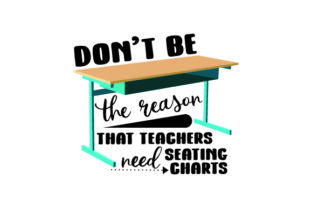
And if you want to make that message stick, the popular "Don't Be the Reason" back-to-school designs in SVG, PNG, EPS, and DXF formats serve as a perfect visual reminder. Display it on a folder, a notebook, or a classroom poster. Sometimes a simple prompt is all it takes to shift the culture.
Be the reason your classroom shines—not the reason it needs a map.