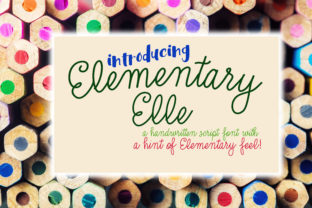
Elementary Elle: A Nostalgic Script Font for Educational Projects
There are fonts that simply look good, and then there are fonts that trigger a memory. Elementary Elle falls into the second category. It is a classic script font designed to evoke the handwriting many of us learned in elementary school—rounded, friendly, and effortlessly readable. For anyone working on educational projects, children’s materials, or content that needs a warm, approachable tone, this font offers more than just visual appeal. It creates a bridge between the viewer and the familiar comfort of early learning years. If you have ever struggled to make educational content feel less clinical and more inviting, Elementary Elle might be the subtle tool that changes how your audience connects with your work.
Unlike many script fonts that lean toward formal cursive or decorative flair, Elementary Elle stays grounded in the handwriting most adults recognize from their own childhood worksheets and classroom posters. That familiarity is its superpower. When you use it, you are not just displaying text—you are tapping into a shared cultural touchpoint that signals trust, simplicity, and a focus on learning.
Why the Right Font Matters for Educational Content
Choosing a font for educational materials is rarely treated as a strategic decision, yet it directly affects readability, engagement, and retention. A script font like Elementary Elle brings a human element that sans-serif or slab-serif fonts often lack. For teachers preparing handouts, lesson plans, or classroom signage, this font reduces the visual distance between the instructor and the student. It looks like someone wrote it with care, not like it came out of a sterile template.
Beyond the classroom, consider how often you see educational content online—blog posts about parenting tips, homeschooling resources, literacy activities, or STEM projects for kids. The typography used in those pieces influences how parents and educators perceive the content’s tone. Elementary Elle signals that the material is approachable and designed with young learners in mind. It says, “This is for you, and it was made with thoughtfulness.”
For creators who produce printables, activity books, or flashcards, the font choice directly impacts usability. A script that mimics natural handwriting helps children bridge the gap between what they see on the page and what they are learning to write themselves. Elementary Elle supports that process because its letterforms feel achievable rather than intimidating.
Practical Benefits for Busy Educators and Creators
Time is a limited resource for most professionals, and the last thing you need is a font that requires constant adjustment to fit your layout. Elementary Elle works well at a range of sizes, from large headings on a poster to smaller body text on a worksheet. Its consistent stroke width and clear ascenders and descenders mean you do not have to spend extra minutes tweaking kerning or line spacing. That efficiency matters when you have a stack of materials to produce before the school week begins or a product launch deadline approaching.
Another practical advantage is the font’s compatibility with both digital and print formats. Whether you are designing a PDF for download or a banner for a classroom wall, Elementary Elle maintains its clarity and charm. It does not blur at smaller sizes or lose its personality when printed on lower-grade paper. For small business owners selling educational resources on platforms like Teachers Pay Teachers, this reliability means fewer returns or complaints about readability. Your customers receive what they expected, and that builds trust in your brand.
Use Cases Where Elementary Elle Shines
Some fonts try to do everything and end up feeling generic. Elementary Elle has a clear sweet spot, and understanding where it works best helps you use it more effectively.
- Printable worksheets and activity books – The script feels natural for instructions, prompts, and fill-in-the-blank exercises. It reduces the formality of the task and encourages children to engage.
- Classroom decor and signage – Alphabet charts, name tags, and bulletin board headers look welcoming without being distracting. The font supports learning goals rather than competing with them.
- Digital resources for parents – Homeschooling guides, reading logs, and chore charts benefit from the nostalgic tone. Parents often share these within communities, so a font that feels familiar can increase the likelihood of your content being saved and passed along.
- Children’s book covers and interiors – For self-published authors, Elementary Elle offers a cost-effective way to establish tone without hiring a custom lettering artist. It works especially well for early reader books and chapter books aimed at ages five through nine.
- Marketing materials for education brands – Flyers, social media graphics, and email headers for tutoring services or learning apps can use Elementary Elle to communicate warmth and expertise simultaneously.
Each of these use cases shares a common thread: the content prioritizes clarity and emotional connection. Elementary Elle reinforces both without requiring elaborate design work.
Who Benefits Most from This Font
While anyone can use Elementary Elle, certain professionals will see a stronger return on their investment. Educators in early childhood and elementary settings are the most obvious group, but the font also serves a wider range of creators.
Teachers and Homeschooling Parents
If you spend hours each week preparing materials for students, you need tools that make your job easier and your content more effective. Elementary Elle reduces the cognitive load on young readers by presenting text in a style they are already learning to write. It reinforces letter recognition and handwriting skills without adding extra confusion. For homeschooling parents who may not have formal design training, the font provides a professional look with minimal effort.
Educational Content Creators and Bloggers
Building an audience around educational content requires consistency and trust. Your typography is part of your brand identity, and Elementary Elle helps you stand out from the sea of generic sans-serif blogs. Whether you share literacy tips on Instagram or sell preschool curriculum on Etsy, the font signals that you understand how children learn and what parents look for. It adds credibility without feeling corporate.
Small Business Owners in the Education Space
Entrepreneurs selling educational products face a crowded market. Every detail matters, from the quality of the content to the visual presentation. Elementary Elle gives your products a cohesive, recognizable look that customers associate with care and attention. Over time, that perception can translate into repeat purchases and word-of-mouth referrals.
Limitations and Fit Considerations
No font is perfect for every situation, and being aware of where Elementary Elle might not be the best choice helps you avoid missteps. Because it is a script font, it is not ideal for long blocks of body text in small sizes. For dense paragraphs, a clean sans-serif like Open Sans or Lato paired with Elementary Elle for headings creates a balanced hierarchy. Using the script for everything can tire the eye and reduce readability, especially for adult readers who may scan content quickly.
Additionally, if your project targets older students or professional development materials for educators, the nostalgic feel of Elementary Elle might feel too informal. For those cases, consider using it sparingly—perhaps for pull quotes or section headers—while relying on a more neutral typeface for the main content. Matching the font’s personality to your audience’s expectations is part of thoughtful design.
Finally, if you are working on a project that requires strict accessibility standards, test Elementary Elle at various sizes and against different background colors. Script fonts can sometimes present challenges for users with visual impairments or reading difficulties. Always provide sufficient contrast and offer alternative text formats when necessary.
Making Elementary Elle Work for Your Goals
Getting the most out of Elementary Elle does not require a design degree. Start by identifying the emotional tone you want your content to convey. If warmth, nostalgia, and approachability align with your message, this font can be a powerful ally. Pair it with organic shapes, soft colors, and simple layouts to reinforce that feeling. Avoid overcomplicating the design—the font carries enough personality on its own.
Test your materials with a small audience before rolling them out widely. Show a worksheet to a few parents or colleagues and ask whether the text feels inviting or too casual. Their feedback will help you calibrate the balance between charm and professionalism. Over time, you will develop an instinct for when Elementary Elle fits naturally and when another option might serve your goals better.
Thoughtful Observations on Font Choice and Connection
Typography often operates below the level of conscious awareness. Readers rarely stop to think, “I like this font,” but they do stop reading when a font feels wrong. Elementary Elle works because it taps into a universal experience—learning to write in elementary school—without forcing itself into the spotlight. It supports the content without overshadowing it. That restraint is part of what makes the font valuable for educational projects where the goal is communication, not decoration.
If you have ever received a handwritten note that made you smile, you understand the power of imperfect, human lettering. Elementary Elle captures some of that quality in a reusable digital form. It gives you a way to add personality to your work without sacrificing clarity or professionalism. For educators, creators, and business owners who want their materials to feel both useful and kind, that combination is hard to beat.