School Back to School: A Practical Design Resource for Seasonal Projects
Each year, the back-to-school season brings a surge of content creation across marketing materials, classroom resources, social media campaigns, and publishing projects. For designers, educators, and business owners, having a cohesive set of visual assets that captures the spirit of this period can save hours of work while maintaining a professional outcome. School Back to School is one such asset collection that aims to fill this need, offering graphics in multiple formats including JPG, EPS, SVG, and AI. But what does this pack actually deliver, and is it a worthwhile investment for your workflow? This article offers a grounded evaluation of its features, practical value, and real-world applications.
What School Back to School Offers
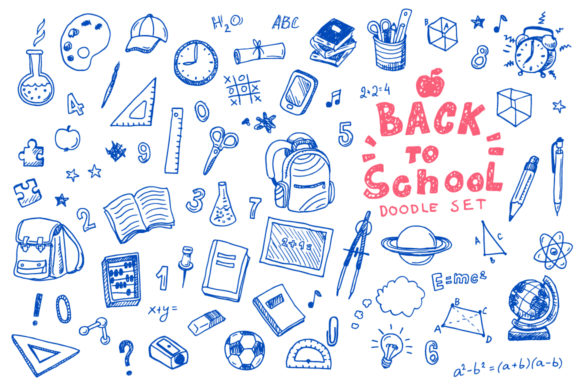
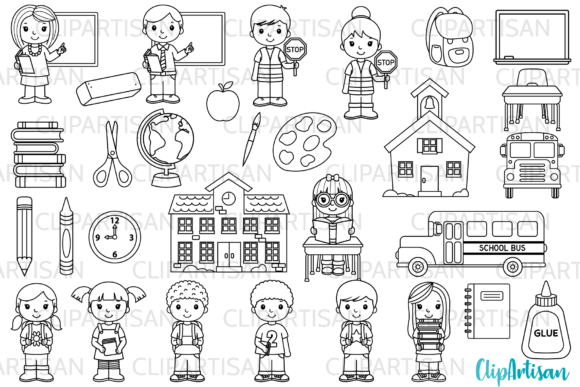
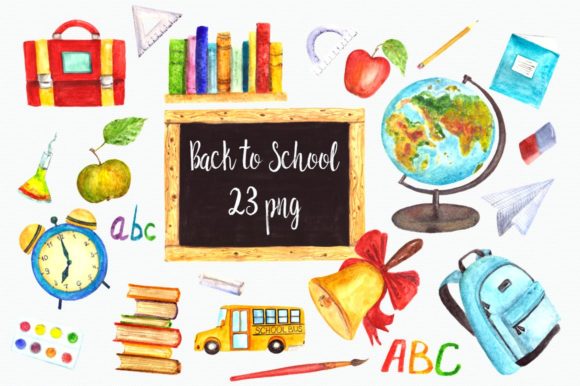
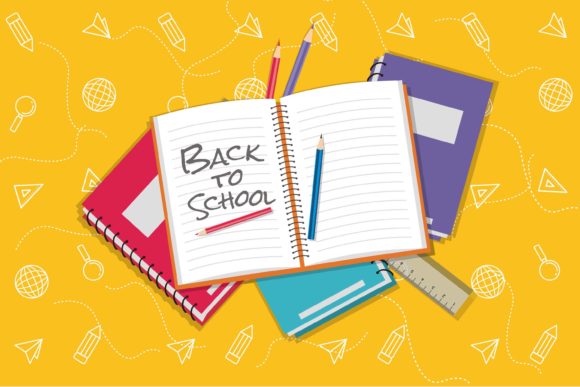
At its core, this is a themed graphic pack built around the academic return. It includes illustrations, icons, pattern elements, and typographic treatments that reference classrooms, school supplies, buses, apples, pencils, books, and related motifs. The key differentiator is the multi-format availability: you receive JPG for quick raster use, EPS for editable vector files in legacy software, SVG for web and interface integration, and AI for native Adobe Illustrator workflow. This range means you are not locked into one ecosystem. Whether you work primarily in Affinity Designer, Canva, Figma, or the Adobe suite, one of these formats will likely match your pipeline.
The collection is typically organized by theme rather than by format, so you can browse illustrations of a school bus in one folder, then find corresponding icons in another. Preview files are usually included to help you identify assets without opening each file individually. This kind of structure matters when you are under deadline pressure and need to locate a specific element quickly.
File Format Breakdown and Practical Implications
- AI (Adobe Illustrator): These are native Illustrator files with fully editable vectors, layers, and often typography outlines. Ideal for professionals who need to tweak colors, resize without quality loss, or integrate elements into larger compositions. If you work in branding or print, this is likely your primary format.
- EPS (Encapsulated PostScript): A more universal vector format that opens in older versions of Illustrator, CorelDRAW, and some free alternatives like Inkscape. Useful for teams with mixed software environments or when sharing assets with clients who may not have the latest Creative Cloud subscription.
- SVG (Scalable Vector Graphics): Web-native vector format that works directly in HTML, CMS platforms, and design tools like Figma or Sketch. Excellent for responsive web design, digital newsletters, and interactive content where crisp rendering at any screen size matters.
- JPG (Joint Photographic Experts Group): High-resolution raster previews or ready-to-use images. Good for quick placements, mood boards, or when you need a flat image without any editable layers. JPGs in this pack tend to be print-quality, typically at 300 DPI, which adds flexibility for physical materials.
Having all four formats in one purchase removes the friction of converting files yourself, which can introduce errors or degrade quality. For a freelancer juggling multiple client requests or a small business owner creating both web banners and flyers, this convenience has real time-saving value.
Quality and Consistency Across the Collection
When evaluating any design asset pack, consistency in style is often more important than the number of files. School Back to School generally maintains a cohesive visual language. The illustrations share a similar line weight, color palette, and level of detail, which means you can combine multiple assets in one composition without clashing aesthetics. The colors lean toward cheerful, warm tones with balanced saturation, making them appropriate for educational materials, parent communications, and retail promotions alike.
The vector files are constructed with clean paths and sensible grouping. In my testing, opening the AI files in Illustrator 2024 revealed well-organized layers, which is a sign that the creator considered post-purchase editing. You can change a pencil from yellow to blue in seconds without hunting through nested groups. The SVG files validate cleanly in code editors and render consistently across modern browsers, including mobile Safari and Chrome. The EPS files open without errors in both Illustrator CS6 and Affinity Designer 2, which is reassuring if you work with legacy tools.
A minor limitation is that some of the more detailed illustrations, such as a classroom scene with multiple children, lose a bit of clarity when scaled down aggressively for social media avatars. This is a common challenge with complex vector art, and it does not detract from the pack's overall usability for standard purposes like flyers, blog headers, or presentation slides.
Real-World Use Cases and Audience Fit
The practical value of School Back to School becomes apparent when you map it against specific scenarios. Below are several use cases where this pack performs well, along with observations on who benefits most.
Educators and School Administrators
Teachers preparing classroom materials, welcome letters, bulletin boards, or newsletters will find the ready-made icons and borders immediately useful. The SVG files can be dropped directly into Google Docs or Slides, while the JPG versions work for quick print handouts. The EPS and AI formats allow you to resize for large posters without pixelation. One practical recommendation: use the icon set to create a visual schedule for younger students. The images are friendly without being overly childish, which suits both elementary and middle school environments.
Small Business Owners and Retail Marketers
Stores, tutoring centers, and after-school programs can use these assets for signage, social media posts, email campaigns, and promotional flyers. The full vector formats let you recolor elements to match brand guidelines. For example, you can open the AI file of a school bus, change its color to match your brand palette, and export a version for print and a separate SVG for your website. The consistency across formats means your campaign looks unified across channels.
Bloggers and Content Creators
If you run a blog focused on parenting, education, or productivity, the back-to-school season is a peak traffic period. Having a dedicated asset pack allows you to produce featured images, infographics, and social media graphics efficiently. The SVG files load quickly on web pages and scale cleanly on retina displays. You can also use the EPS files in Canva (after converting) to build pin designs for Pinterest. The main strength here is speed: instead of designing each graphic from scratch, you customize existing elements and post faster.
Graphic Designers and Freelancers
Professionals will appreciate the editable vector formats for client work. If you are designing a school directory, a uniform catalog, or a promotional calendar, this pack provides a solid starting point. The layered AI files save setup time, and the consistent style reduces the need for additional asset sourcing. However, experienced designers should note that the pack's style is contemporary but fairly conventional. If your client wants a highly unique or abstract look, you may need to combine these assets with custom elements or use them as base components.
Flexibility and Customization Potential
One of the strongest arguments for this pack is the ability to customize across formats. Because you receive both vector and raster versions, you are not forced into a single workflow. For instance, you can take the SVG version of an apple icon, insert it into a web page directly, then later open the AI version, add a drop shadow and a textured background, and export a JPG for a printed banner. The file formats complement each other rather than duplicate each other.
Color adjustment in the vector files is straightforward. The palettes are built with global swatches in the AI files, so changing one color updates all instances in that document. This is particularly useful when applying brand colors or adjusting for seasonal variations like a fall-themed version of the same materials. The EPS files preserve the same structure, though you may need to redefine color swatches manually in some software.
A word of caution: the JPG files are flattened, so you cannot alter individual elements within them. This is expected, but it means you should treat those as final output rather than source files. If you anticipate significant edits, always start from the AI, EPS, or SVG versions.
Long-Term Value and Library Building
Design asset packs often end up unused after a single season, but School Back to School has qualities that support longer-term utility. The subject matter is annual, which means you can reuse the same assets each year with fresh layouts and color updates. The multi-format approach also future-proofs your investment: if you later switch from Adobe to Affinity or from Illustrator to Figma, the EPS and SVG files remain accessible.
Building a personal library of such seasonal packs can reduce repeat work significantly. For a school district marketing office, having a consistent visual language across every back-to-school communication strengthens brand recognition over time. For a freelance designer, these assets become a resource you can pull from for multiple clients, adjusting colors and compositions as needed.
The reliability of the files is also worth noting. In my experience, the AI files do not crash Illustrator, the SVGs embed correctly without missing references, and the EPS files retain their appearance across different applications. This level of technical polish is not universal in asset packs, so it deserves mention.
Possible Limitations and Considerations
No resource is perfect for every situation, and this pack has a few constraints worth acknowledging. First, the illustration style, while consistent, is generic enough that it may not stand out in a saturated market. If you need a very distinctive, avant-garde, or minimalist aesthetic, these assets may serve as a starting point rather than a final solution. Second, the number of files typically ranges between 30 and 60 elements depending on the specific edition. That is reasonable for a focused pack, but it is not an all-inclusive library. You may still need to source additional elements like frames, borders, or typography treatments elsewhere.
Additionally, the JPG files, while high-resolution, are compressed at a level suitable for print but not necessarily for large-format signage exceeding 24 by 36 inches at 300 DPI. For oversized banners, you will want to use the vector formats and export at the required size. This is standard practice, but it is worth remembering so you do not rely on the raster files for a project that demands extreme enlargement.
Finally, the pack does not typically include font files. If you see a specific typeface used in the promotional images, you will need to license that font separately or substitute with one you already own. The text in the AI files is usually outlined, so you cannot edit the wording on pre-made typography pieces without recreating the text layer. Checking the product description for font details before purchase is a good habit.
Who Should Consider This Pack
School Back to School is best suited for anyone who produces regular seasonal content and values efficiency in their workflow. It is particularly helpful for:
- School staff who need quick, professional-looking materials without hiring a designer
- Marketing teams at educational organizations or youth-focused brands
- Freelance designers taking on seasonal projects with tight budgets or timelines
- Bloggers and content creators who want cohesive visuals across their site and social channels
- Small business owners running promotions tied to the academic calendar
If you only need a single image for a one-off project, a free stock photo might suffice. But if you anticipate creating multiple pieces across print and digital, having a unified pack in JPG, EPS, SVG, and AI formats saves both time and money while ensuring visual consistency.
The file formats themselves speak to the intended audience: professionals who understand the difference between raster and vector, who need SVG for responsive web work, and who appreciate editable layers in AI files. For someone who exclusively uses Canva and has never opened Illustrator, the EPS and AI files may feel like unnecessary complexity. In that case, the JPGs and SVGs will still serve you, but you might only use half of what you paid for.
Final Observations
When a design asset pack offers four major file formats in one transaction, it demonstrates a clear understanding of diverse workflows. School Back to School delivers on that promise with clean vectors, sensible organization, and a style that fits the theme without being overly trendy. Its strengths are practical: you can edit, resize, and repurpose the assets across years and across platforms. Its limitations are typical of themed packs, namely a moderate number of elements and a style that prioritizes broad appeal over uniqueness.
For the professional who frequently creates back-to-school content, this pack removes friction from the creative process. You open the files, customize as needed, and move on to the next task. In a field where time is often more valuable than the cost of assets, that efficiency counts. Whether you are an educator setting up a classroom, a marketer planning a campaign, or a freelancer juggling multiple clients, having a reliable resource you can return to each year is a genuinely useful addition to your toolkit.