Hand Drawing Back to School Element: Assessing Its Place in Your Design Work
When you need graphics for back‑to‑school materials, the range of options can feel overwhelming. From polished stock photos to detailed digital illustrations, each style carries its own set of expectations. Among these, the Hand Drawing Back to School Element offers a distinct aesthetic that balances warmth, simplicity, and versatility. Available as an EPS 10 vector and a JPEG, this resource fits into a specific niche that may or may not align with your project’s goals. Understanding where it excels and where it falls short will help you decide whether it belongs in your toolkit.
What Is Hand Drawing Back to School Element?
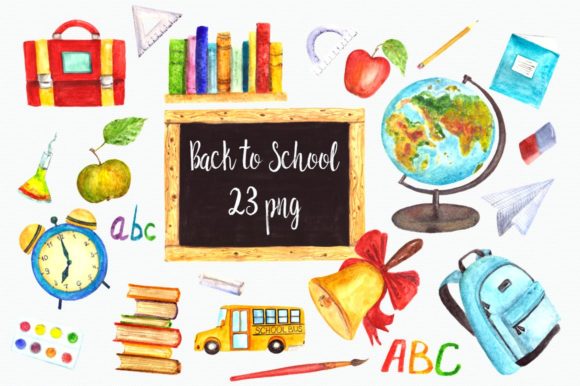
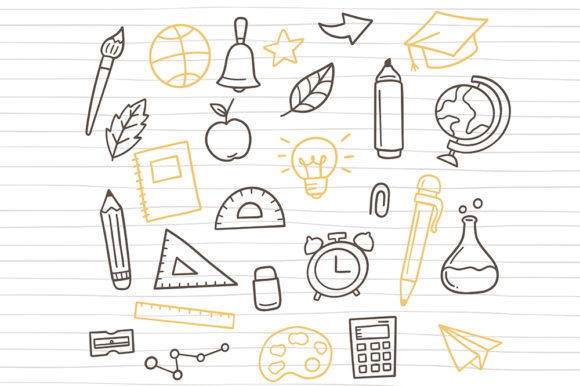
This is a graphic asset that features hand‑drawn line art or lightly colored sketches of classic back‑to‑school imagery: books, pencils, apples, school buses, chalkboards, and related motifs. The style is intentionally unpolished, emphasizing irregular lines, slight texture, and a human touch. Unlike photorealistic images or heavily rendered digital illustrations, hand‑drawn elements retain a sketch‑like quality that can feel approachable and nostalgic. The EPS 10 vector format allows you to scale the artwork without losing quality, while the included JPEG version serves as a ready‑to‑use raster preview. This combination makes the Hand Drawing Back to School Element a flexible starting point for a variety of design contexts, from classroom posters to promotional flyers.
How It Compares with Other Back‑to‑School Graphics
To evaluate the Hand Drawing Back to School Element fairly, it helps to place it alongside common alternatives. Not every project calls for the same visual language, and your choice should depend on the tone, audience, and purpose of the material.
Versus Photorealistic Stock Photos
Stock photos offer a high degree of realism and context. A photo of a classroom, a child with a backpack, or a neatly arranged desk can immediately convey a specific scene. But photos come with limits: they often require models, permissions, and a precise fit with your layout. They also carry a literal quality that may feel too specific for abstract or conceptual designs. The Hand Drawing Back to School Element sits at the opposite end of the spectrum. Its simplified, illustrative nature allows viewers to fill in gaps with their own imagination. If your project needs a universal, non‑distracting visual that doesn't compete with text, the hand‑drawn approach can be a stronger choice.
Versus Detailed Vector Illustrations
Detailed vector illustrations – those with complex shading, multiple gradients, and intricate scenes – provide a polished, professional look. They are well suited for brand materials where consistency and sophistication matter. However, they can appear stiff if not designed carefully. The Hand Drawing Back to School Element deliberately avoids that level of finish. Its roughness can read as honest and unpretentious, which is valuable for informal communication, school newsletters, or designs targeting young children. On the other hand, if you are creating a corporate report about educational trends, a more refined vector may better match the audience’s expectations.
Versus Clip Art Collections
Traditional clip art often relies on symmetrical shapes, uniform line widths, and predictable compositions. It can be efficient but also generic. The hand‑drawn style, by contrast, introduces quirks such as uneven strokes, slight variations in spacing, and an organic flow. These imperfections add character – but they can also clash with a design that demands geometric precision. The Hand Drawing Back to School Element lives somewhere between clip art and custom illustration. It gives you a ready‑made set of icons with a cohesive look, but it does not offer the same degree of customisation as starting from scratch with a digital pen.
Strengths of the Hand Drawing Back to School Element
Knowing the specific strengths of this resource helps you identify situations where it can outperform other options.
- Approachability and warmth. Hand‑drawn imagery feels less institutional than many stock or vector alternatives. It can soften a message and make educational materials feel more inviting.
- Scalable vector format. The EPS 10 file allows you to resize the element from a small icon to a large poster without pixelation. This is important if you need to use the graphic across different mediums.
- Immediate usability. With both an editable vector and a ready‑to‑use JPEG, you can open the file in most design software or drop the JPEG straight into a document. No extra conversion steps are required.
- Consistent theme. All objects in the set follow the same hand‑drawn aesthetic, which saves you from having to mix and match styles that might clash.
- Time‑saving. Instead of drawing each element from scratch, you have a cohesive collection that you can arrange, combine, or recolour to suit your layout.
Trade‑Offs and Limitations
No single resource is right for every project. The Hand Drawing Back to School Element has clear limitations that you should weigh before committing.
- Limited realism. If your design requires lifelike depictions – for example, a detailed anatomical diagram or a photo of actual school supplies – this style will not deliver. Readers seeking realism may find the sketchy lines distracting.
- Lower perceived professionalism in some contexts. Corporate or formal educational materials often expect a more finished appearance. The raw quality of hand‑drawn graphics might undermine credibility in a board presentation or a rigorous academic publication.
- Potential clash with modern branding. Brands that rely on sleek, minimalist shapes or bold flat colours may find the irregular strokes out of place. The hand‑drawn look works best when warmth and authenticity are already part of your brand identity.
- Colour palette constraints. While the EPS 10 file can be recoloured, the original design likely uses a limited palette. If you need a wide spectrum of hues, you will need to adapt the elements manually.
- Not a full layout solution. The element is a collection of individual icons and illustrations, not a pre‑composed scene. You will still need to arrange and integrate them with text and other design components.
When the Hand Drawing Back to School Element Is a Strong Fit
Consider using this resource in projects where the primary goal is connection rather than precision. Examples include:
- Classroom decorations or bulletin board materials that need a friendly, handmade feel.
- Newsletters for elementary schools or community education programs where an informal tone is welcome.
- Social media graphics for back‑to‑school campaigns that aim to engage parents with a nostalgic touch.
- Worksheet headers or activity sheets for young children, where the slight irregularity of line art can feel less intimidating than stiff computer‑generated graphics.
- Non‑profit or small‑budget projects that require a cohesive set of illustrations without the cost of a custom illustration commission.
When an Alternative May Be a Better Choice
The Hand Drawing Back to School Element is not ideal for every scenario. You may need to look elsewhere if:
- Your audience expects photorealism – for instance, a product catalog or a before‑and‑after comparison of school supplies.
- Your design relies on strict geometry, such as infographics that require precise lines, arrows, and exact alignments.
- You are creating materials for a large corporation or a government institution with strict visual identity guidelines that specify a clean, modern look.
- You require highly detailed, custom illustrations that tell a specific story – for example, a multi‑character scene depicting children in a classroom.
- You need an animation‑ready asset with separate layers for character rigging; while the vector files can be separated, the hand‑drawn style may not deform smoothly.
Key Decision Factors to Consider
To make an informed choice, evaluate your project on these criteria:
- Tone – Is warmth and approachability more important than polish? If yes, hand‑drawn is worth exploring.
- Audience – Will viewers appreciate a sketched, personal quality, or will they perceive it as amateurish? Test with a small sample if possible.
- Format requirements – Do you need editable vectors? The EPS 10 format gives you flexibility. If you only need static images, the JPEG is sufficient.
- Integration with existing materials – Does your current set of graphics already lean toward one style? Consistency across pieces helps build recognition.
- Budget and timeline – The hand‑drawn element offers a ready‑made solution. Custom illustration would cost more and take longer. Weigh the trade‑off between uniqueness and convenience.
- Scalability – If you plan to use the element on large‑format prints, the vector format supports infinite scaling. Test the JPEG at your target size to check for visible artifacts.
Practical Example: Choosing for a School Newsletter
Imagine you are designing a monthly newsletter for a primary school. The content includes updates from teachers, a calendar of events, and articles about student activities. The audience is parents and guardians. A hand‑drawn style can create a cohesive visual identity across issues. The Hand Drawing Back to School Element provides icons for reading, math, sports, and art. You can place them next to article headings, use them as bullet points, or create a simple header banner. Because the lines are organic, they avoid the sterility that might alienate readers. However, if the newsletter also needs to include a detailed map of the school playground, a hand‑drawn map might lack the precision needed for navigation. In that case, a simple schematic or a photo would be a better companion piece. The key is to mix the hand‑drawn style selectively, reserving it for areas where warmth adds value, and switching to more exact visuals when clarity is critical.
Final Thoughts on Fit and Value
The Hand Drawing Back to School Element is not a universal solution, nor does it pretend to be. Its success depends on how well it aligns with your project’s emotional register and practical constraints. When you need a resource that feels human, easy to adapt, and quick to deploy, this style can outperform more elaborate alternatives. When your project demands rigidity, realism, or corporate polish, you will likely need to look beyond this kind of hand‑drawn asset. By honestly assessing your own priorities – tone, audience, format, and context – you can decide whether the hand‑drawn approach will strengthen your message or create friction. The best choice is the one that serves your readers and your objectives, not the trendiest style or the most affordable download. In many back‑to‑school designs, a balanced combination of visual approaches works best, and the Hand Drawing Back to School Element can be a valuable part of that mix.